Fertility Yoga: Can Yoga Support Fertility?
Explore whether yoga can support fertility, reduce stress, and promote overall reproductive health while trying to conceive.
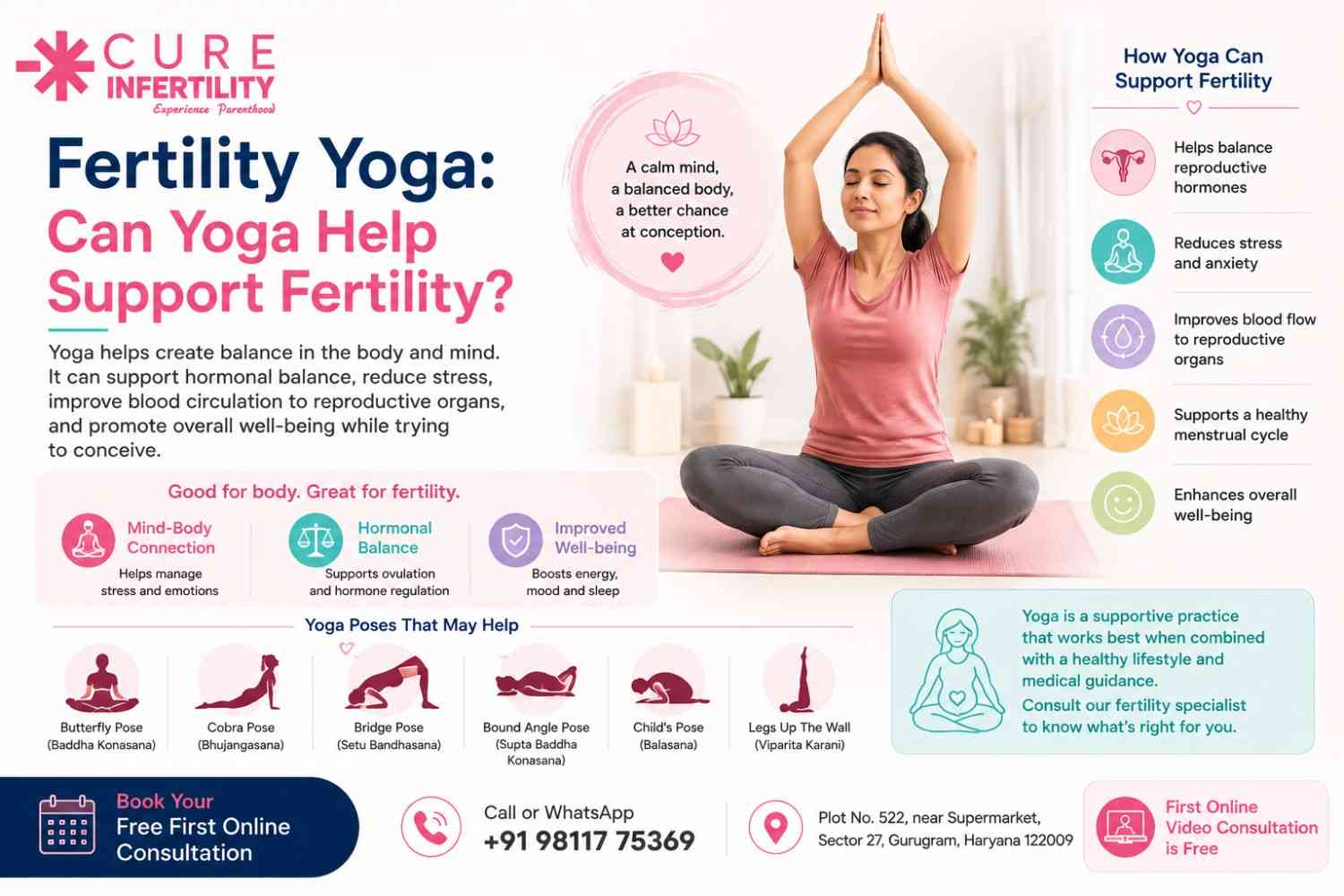
Fertility yoga has become a popular addition to conception journeys, and it's a reasonable one, but it helps to be clear about what it can and can't do. Here's an honest look at how yoga fits into the picture, what it actually supports, and where it has real limits.
What Is Fertility Yoga?
Fertility yoga isn't a separate discipline so much as a gentler, more restorative style of practice built around relaxation and pelvic circulation rather than intensity or flexibility goals. It typically draws on slow-paced hatha or restorative yoga, with an emphasis on breathwork, hip-opening poses, and nervous system regulation, as opposed to the more vigorous flows or hot yoga styles.
The Stress-Fertility Connection
Chronic stress activates the HPA axis (hypothalamic-pituitary-adrenal axis), raising cortisol levels in a way that can interfere with the hormonal signaling that drives regular ovulation. This is the main mechanism behind why stress management, yoga included, comes up so often in fertility conversations. Yoga works largely by activating the parasympathetic nervous system, the body's "rest and digest" state, which counters some of that stress response.
How Yoga May Support Fertility
- Stress reduction: the best-supported benefit, and a meaningful one, since lower stress can support more regular ovulation
- Improved pelvic blood flow: certain gentle poses are thought to support circulation to the reproductive organs, though this effect is harder to measure directly
- Better sleep quality: relaxation-focused practice often improves sleep, which in turn supports hormonal balance
- Support for insulin sensitivity: some research suggests yoga may modestly help with insulin regulation, relevant for PCOS-related ovulatory issues
- Emotional support: group fertility yoga classes often double as a support space, which matters given how isolating fertility struggles can feel
Yoga tends to work best paired with other supportive habits, like fertility-friendly nutrition, rather than as a standalone approach.
Poses Often Included in Fertility Yoga
Common poses include gentle hip openers like butterfly pose (baddha konasana), restorative poses like legs-up-the-wall, child's pose, cat-cow for gentle spinal movement, and supported reclining twists. The emphasis throughout is on ease and breath, not depth or exertion.
Poses generally avoided include deep inversions, intense core or abdominal work, deep twists, and anything jarring or high-impact, especially around ovulation or during any fertility treatment cycle.
Yoga If You're Undergoing Fertility Treatment
This is where caution matters most. During ovarian stimulation for IVF or IUI, the ovaries are enlarged and more vulnerable, so vigorous poses, deep twists, jumping, and intense core work should be avoided to reduce the risk of ovarian torsion or discomfort. After an embryo transfer, most clinics recommend switching entirely to gentle, restorative practice, or pausing yoga altogether for a short period, rather than continuing a regular routine. If you're mid-treatment, it's worth checking with your fertility doctor about what's appropriate for your specific stage before continuing any yoga practice.
What the Evidence Actually Shows
It's worth being upfront here: yoga is not a proven fertility treatment on its own. The stress-reduction and general wellbeing benefits are well documented, and some studies on mind-body programs alongside IVF show modest improvements in wellbeing and treatment adherence, though the evidence for yoga directly improving pregnancy rates is limited and not conclusive. Yoga also can't resolve underlying causes like blocked fallopian tubes, low ovarian reserve, or significant male factor infertility, those still need proper testing and treatment. The realistic way to think about it is as a genuinely useful complement to medical care, not a substitute for it.
When to See a Specialist Instead of (or Alongside) Yoga
Yoga can run alongside a treatment plan, but it shouldn't delay getting evaluated if you've been trying without success. If you're under 35, that's generally after 12 months of trying; 35 and older, after 6 months, or sooner with irregular cycles or a known condition. You can explore the full range of options on our fertility specialties page. If ovulation itself is the issue, ovulation induction is often the more direct next step.
If you're based in or around Gurgaon, you can get a full evaluation at our Sector 27 clinic under Dr. Rashmi Agrawal. You can book an appointment here to get started.
FAQs
Can yoga alone help you get pregnant?
Not on its own. Yoga supports stress reduction and general wellbeing, which can help with regular ovulation, but it can't address structural or significant hormonal causes of infertility. It works best alongside proper medical care, not instead of it.
Is yoga safe during IVF stimulation?
Gentle, restorative yoga is generally fine, but vigorous poses, deep twists, and intense core work should be avoided once the ovaries are stimulated, since they're more vulnerable at that stage. Always check with your fertility doctor about what's appropriate for your specific protocol.
Is yoga safe after an embryo transfer?
Most clinics recommend switching to gentle, restorative practice or pausing yoga briefly after transfer, rather than continuing a regular routine. Ask your doctor for guidance specific to your case.
What poses should be avoided when trying to conceive?
Deep inversions, intense core or abdominal work, deep twists, and high-impact or jarring movements are generally avoided, particularly during ovulation or any treatment cycle.
How often should you practice fertility yoga?
There's no fixed rule, but a few sessions a week of gentle, restorative practice is a reasonable starting point for most people, adjusted based on comfort and any treatment stage you're in.
Can yoga help with PCOS-related infertility?
It may help modestly with stress and insulin sensitivity, both relevant to PCOS, but it isn't a substitute for proper treatment. If ovulation is irregular or absent, a doctor-guided approach, often including ovulation induction, is usually still needed.
Have Questions About This Topic?
Get a personalised consultation with Dr. Rashmi Agrawal at Cure Infertility, Sector 27, Gurugram.
Book Consultation