Fertility Increasing Foods: What to Eat When Trying to Conceive
Discover nutrient-rich foods that can support reproductive health and learn what to include in a balanced diet when trying to conceive.
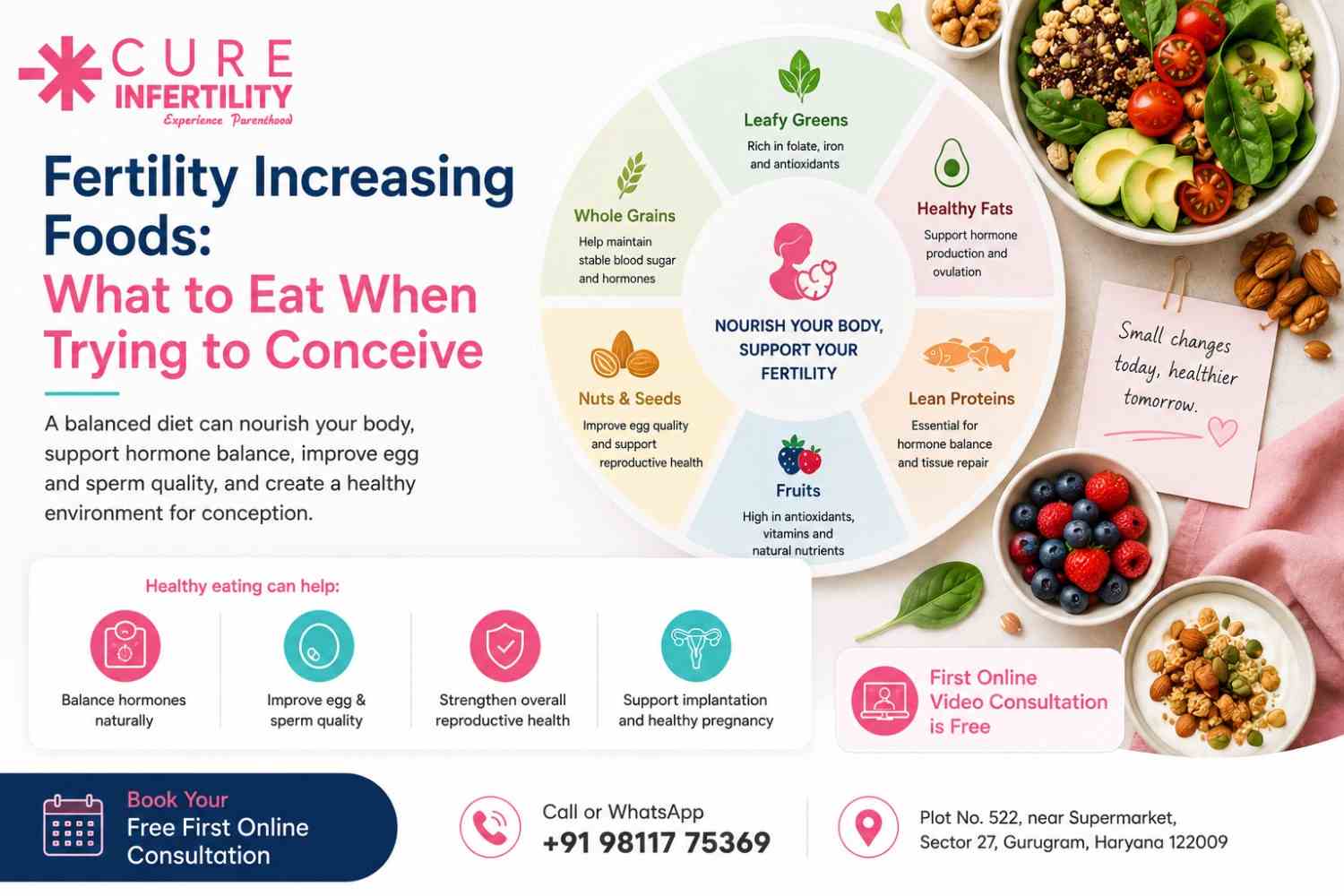
What you eat won't override an underlying medical issue, but it can meaningfully support egg quality, hormone balance, and ovulation while you're trying to conceive. Think of nutrition as one lever among several, not a guarantee, but a genuinely useful one. Here's what the evidence points to.
Why Diet Matters for Fertility
Reproductive hormones, egg development, and ovulation are all sensitive to nutrient intake, blood sugar stability, and inflammation. Diets that support stable insulin levels and reduce oxidative stress are consistently associated with better ovulatory function, which is why food choices come up so often in fertility consultations, alongside, not instead of, any medical evaluation that's needed.
Foods That Support Egg Quality
Egg quality is affected by oxidative stress, so antioxidant-rich foods are a good place to start: berries, dark leafy greens (spinach, kale), citrus fruits, and nuts. These help neutralize the free radicals that can damage egg cells over time. Colorful vegetables in general, think bell peppers, tomatoes, and carrots, add a broad mix of vitamins and antioxidants to the same effect.
Folate and Fertility
Folate plays a direct role in ovulation and early fetal development, which is why it's one of the most emphasized nutrients when trying to conceive. Good sources include dark leafy greens, lentils and other legumes, citrus fruits, and fortified cereals. Most health bodies recommend around 400 micrograms of folic acid daily starting before conception, though it's worth confirming the right amount for you with your doctor, especially if you have any existing conditions.
Healthy Fats and Hormone Production
Hormone production depends on healthy fat intake. Omega-3 rich foods, fatty fish like salmon and sardines, walnuts, flaxseeds, and chia seeds, support this process and have been linked to better egg quality. Olive oil is a solid everyday choice too. Trans fats, on the other hand, found in many packaged and fried foods, are consistently linked with poorer ovulatory function and are worth minimizing.
Complex Carbohydrates Over Refined Carbs
Blood sugar swings from refined carbs (white bread, sugary snacks, sweetened drinks) can disrupt the hormonal signals needed for regular ovulation. Swapping these for complex carbs, whole grains, legumes, and vegetables, helps keep insulin levels steadier, which matters even more for women with PCOS, where insulin resistance is often part of the picture. If ovulation is already irregular, dietary changes alone often aren't enough, and ovulation induction may be recommended alongside them.
Protein Sources
Where your protein comes from may matter as much as how much you eat. Some research links a higher intake of plant-based protein, beans, lentils, tofu, nuts, with better ovulatory fertility compared to relying heavily on animal protein, particularly red and processed meat. This doesn't mean cutting out animal protein entirely, just balancing it with more plant-based sources.
Iron and Zinc
Iron deficiency has been associated with ovulatory infertility, so it's worth including iron-rich foods like leafy greens, legumes, and lean meats, ideally paired with vitamin C to improve absorption. Zinc, found in shellfish, pumpkin seeds, and nuts, plays a role in hormone regulation and egg maturation for women, and in sperm health for men.
Dairy Choices
Some studies suggest full-fat dairy may support ovulatory fertility slightly better than low-fat versions, possibly due to how fat content affects hormone levels, though the evidence here is less conclusive than for other nutrients. It's reasonable to not go out of your way to choose low-fat dairy specifically for fertility reasons, but this isn't a strong enough finding to build your whole diet around.
Foods and Habits to Limit
- Trans fats: found in fried and heavily processed foods, linked to poorer ovulatory function
- Excess added sugar: contributes to blood sugar swings that can affect hormone balance
- High caffeine intake: most guidance suggests keeping it moderate rather than eliminating it entirely
- Alcohol: best minimized or avoided while actively trying to conceive
- Processed and red meat in excess: worth balancing with more plant-based protein sources
What About Supplements?
Folic acid is the one most consistently recommended before conception. Others, like vitamin D and CoQ10, come up often in fertility discussions, but the right supplement plan really depends on your individual bloodwork and history. It's worth discussing this with your doctor rather than self-prescribing, since some supplements can interact with medications or aren't necessary unless you have a specific deficiency.
Diet Alone Isn't Always Enough
Good nutrition supports fertility, but it doesn't substitute for a proper workup if you've been trying for a while without success. If you're under 35, that's generally after 12 months of trying; 35 and older, after 6 months. At that point, it's worth exploring the full range of options on our fertility specialties page, which covers everything from IUI to IVF depending on what's actually going on.
Where to Get Personalized Guidance in Gurgaon
If you're based in or around Gurgaon, you can get a proper fertility evaluation, including nutritional guidance tailored to your bloodwork, at our Sector 27 clinic under Dr. Rashmi Agrawal. You can book an appointment here to get started.
FAQs
Can food alone fix infertility?
No. Diet supports egg quality, hormone balance, and ovulation, but it can't correct structural issues, blocked tubes, severe male factor infertility, or significant hormonal disorders. It works best alongside, not instead of, proper medical evaluation.
How long before diet changes affect fertility?
Egg development takes about three months from start to maturity, so most dietary changes need at least that long to show any measurable effect on egg quality.
Is coffee bad for fertility?
Moderate caffeine intake, generally cited as under 200mg a day, roughly one to two cups of coffee, isn't strongly linked to fertility problems. Heavy intake is where the concern grows.
Should I cut out carbs completely while trying to conceive?
No. The distinction that matters is refined versus complex carbs, not cutting carbs out altogether. Whole grains, legumes, and vegetables are genuinely helpful, not something to avoid.
Do fertility supplements actually work?
Some, like folic acid, have strong evidence behind them for specific benefits. Others are more situational and depend on whether you actually have a deficiency. It's best to get guidance from your doctor rather than taking a broad stack of supplements without knowing what you actually need.
Does weight affect fertility?
Yes, both being significantly underweight and significantly overweight can disrupt ovulation, since body fat plays a role in hormone regulation. A doctor can help you understand whether weight is a relevant factor in your specific case.
Have Questions About This Topic?
Get a personalised consultation with Dr. Rashmi Agrawal at Cure Infertility, Sector 27, Gurugram.
Book Consultation