Ovulation and Fertility Cycle: Understanding Your Most Fertile Days
Learn how ovulation works, understand the fertility cycle, and identify your most fertile days to improve your chances of conception.
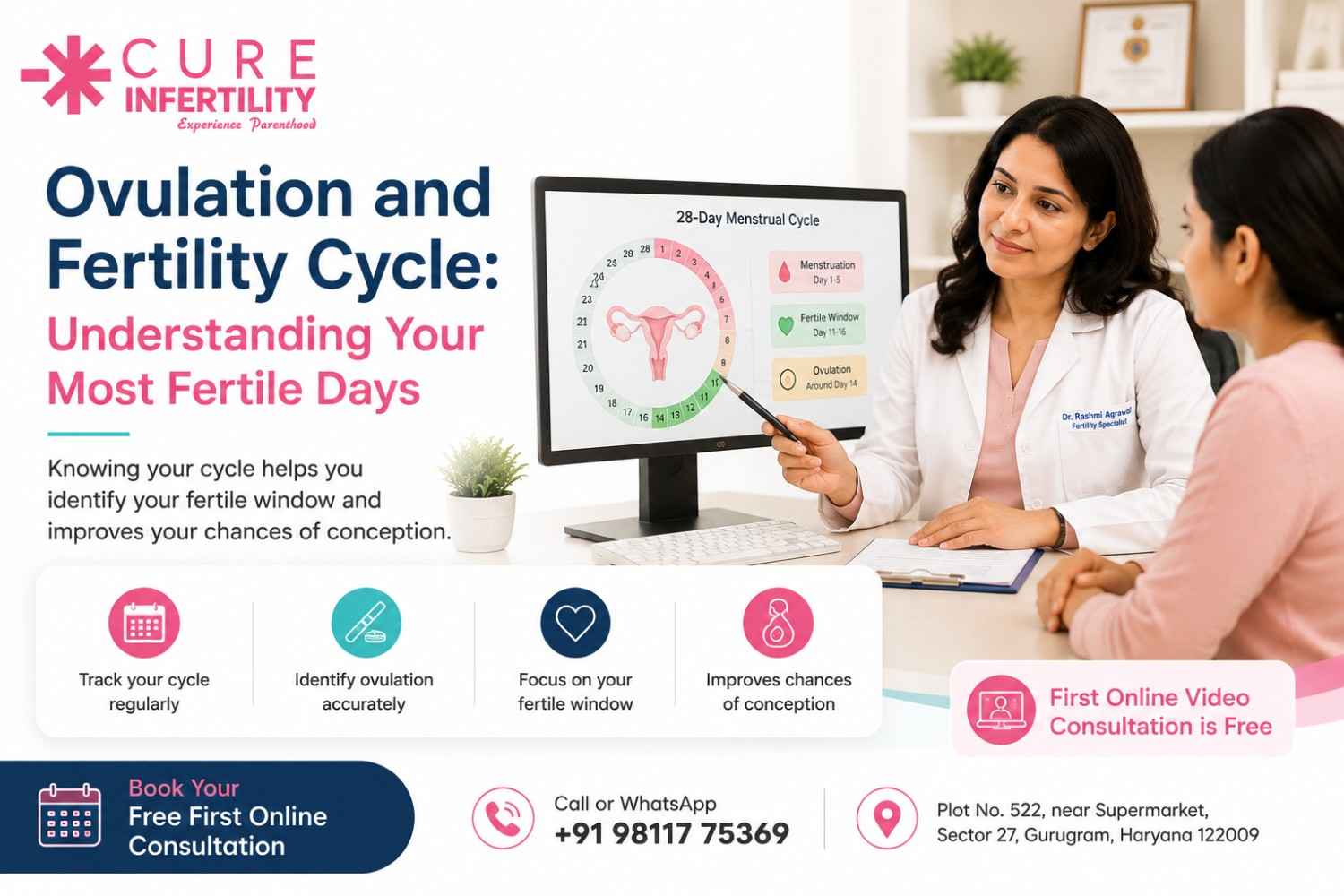
Knowing when you're ovulating is one of the simplest, most effective things you can do while trying to conceive. Timing matters more than most people realize, since there are only a handful of days each cycle when pregnancy is actually possible. Here's how the cycle works, how to spot your fertile window, and when irregular ovulation is worth getting checked.
The Phases of the Menstrual Cycle
A typical cycle runs 21 to 35 days, with 28 days being the average, and is made up of four phases.
Menstrual phase: the period itself, days 1 to about 5, marking the start of the cycle.
Follicular phase: runs from day 1 until ovulation. This is when the ovaries develop follicles, each containing an egg, under the influence of FSH. This phase is the one most likely to vary in length from person to person.
Ovulation: the release of a mature egg from the ovary, triggered by a surge in LH.
Luteal phase: the roughly two-week stretch between ovulation and the next period, when the uterine lining thickens in preparation for a possible pregnancy.
What Is Ovulation, Exactly?
Ovulation happens when a mature follicle ruptures and releases an egg, which then travels into the fallopian tube where it can be fertilized. It's triggered by a sharp rise in Luteinizing Hormone (LH), known as the LH surge, which typically occurs 24 to 36 hours before the egg is actually released. After ovulation, the ruptured follicle becomes the corpus luteum, which produces progesterone to support a potential pregnancy.
Calculating Your Fertile Window
A common misconception is that everyone ovulates on day 14. In reality, ovulation timing depends on the length of the follicular phase, which varies quite a bit, while the luteal phase stays fairly consistent at around 12 to 14 days regardless of overall cycle length. That means the more reliable way to estimate ovulation is to count backward from your next expected period, not forward from your last one.
Your actual fertile window is about six days long: the five days leading up to ovulation, plus the day of ovulation itself. This is because sperm can survive in cervical mucus for up to five days, while the egg itself is only viable for 12 to 24 hours after release. The two days right before ovulation, and the day of ovulation itself, are when the odds of conception are highest.
Signs and Symptoms of Ovulation
Your body gives off a few reliable cues around ovulation:
- Cervical mucus changes: it becomes clear, slippery, and stretchy, often compared to raw egg white, in the days leading up to ovulation
- A rise in basal body temperature (BBT): a slight increase of about 0.5 to 1°F after ovulation, caused by progesterone
- Mittelschmerz: mild, one-sided pelvic discomfort some women feel around the time an egg is released
- A positive ovulation predictor kit (OPK): detects the LH surge, usually 24 to 36 hours before ovulation
- Other signs some women notice: increased libido, mild bloating, or breast tenderness
Tracking Methods
- BBT charting: confirms ovulation happened after the fact, since temperature rises only once progesterone kicks in
- Ovulation predictor kits: predict ovulation in advance by picking up the LH surge, useful for timing intercourse
- Cervical mucus tracking: a low-cost, hormone-free method that works well once you know what to look for
- Fertility apps: combine cycle data with the above methods, though accuracy depends on how consistently you log symptoms
- Ultrasound follicle tracking: used clinically, especially during treatment cycles, to watch follicles grow in real time and pinpoint ovulation with far more precision than home methods
When Ovulation Isn't Regular
Irregular or absent ovulation is more common than people think, and it can stem from PCOS, thyroid dysfunction, high stress, significant weight fluctuations, or perimenopause. Signs to watch for include cycles that vary widely in length, missing periods, or no clear fertile signs across several cycles. If this sounds familiar, ovulation induction is usually the first line of treatment, using medication to help the ovaries release an egg on a more predictable schedule.
Making the Most of Your Fertile Window
Once you have a sense of your fertile window, timing intercourse every 1 to 2 days during that stretch, rather than only on the "predicted" ovulation day, gives sperm the best chance of already being present when the egg is released. If you've been timing intercourse carefully around your fertile window for several cycles without success, it may be time to consider IUI (Intrauterine Insemination), which places sperm directly into the uterus around the time of ovulation to improve the odds.
When to See a Specialist
Tracking your cycle is a good starting point, but it isn't a substitute for a proper evaluation if things aren't adding up. See a specialist if you're under 35 and haven't conceived after 12 months of trying, or 35 and older after 6 months, or sooner if your cycles are consistently irregular or you're not seeing any signs of ovulation at all. You can explore the full range of options on our fertility specialties page. If you're based in or around Gurgaon, consultations are available at our Sector 27 clinic under Dr. Rashmi Agrawal, and you can book an appointment here to get started.
FAQs
How many days after your period do you ovulate?
It varies by cycle length, but in an average 28-day cycle, ovulation usually happens around day 14. Shorter or longer cycles shift this earlier or later, since it's the follicular phase that varies, not the two weeks after ovulation.
Can you get pregnant right after your period?
It's less likely but not impossible, especially with shorter cycles where ovulation happens earlier, or if sperm survive in the reproductive tract from intercourse right at the tail end of your period.
How long does the fertile window actually last?
About six days: the five days before ovulation plus the day of ovulation itself, with the two days just before ovulation offering the highest chances of conception.
Does everyone ovulate exactly on day 14?
No. Day 14 only applies to a textbook 28-day cycle. Ovulation timing shifts with the length of your follicular phase, which is why counting backward from your next expected period is more accurate than counting forward from your last one.
Can stress delay ovulation?
Yes. High stress can disrupt the hormonal signals that trigger ovulation, sometimes delaying it or, in more extreme cases, suppressing it for a cycle altogether.
Do ovulation predictor kits work if your cycles are irregular?
They can, but they're less reliable, since irregular cycles make it harder to know when to start testing. In these cases, a doctor may recommend ultrasound follicle tracking for a more accurate picture.
Have Questions About This Topic?
Get a personalised consultation with Dr. Rashmi Agrawal at Cure Infertility, Sector 27, Gurugram.
Book Consultation