Test for Fertility in Women: Which Tests Are Done?
Wondering which tests check fertility in women? Learn about common fertility tests, what they assess, and when your doctor may recommend them.
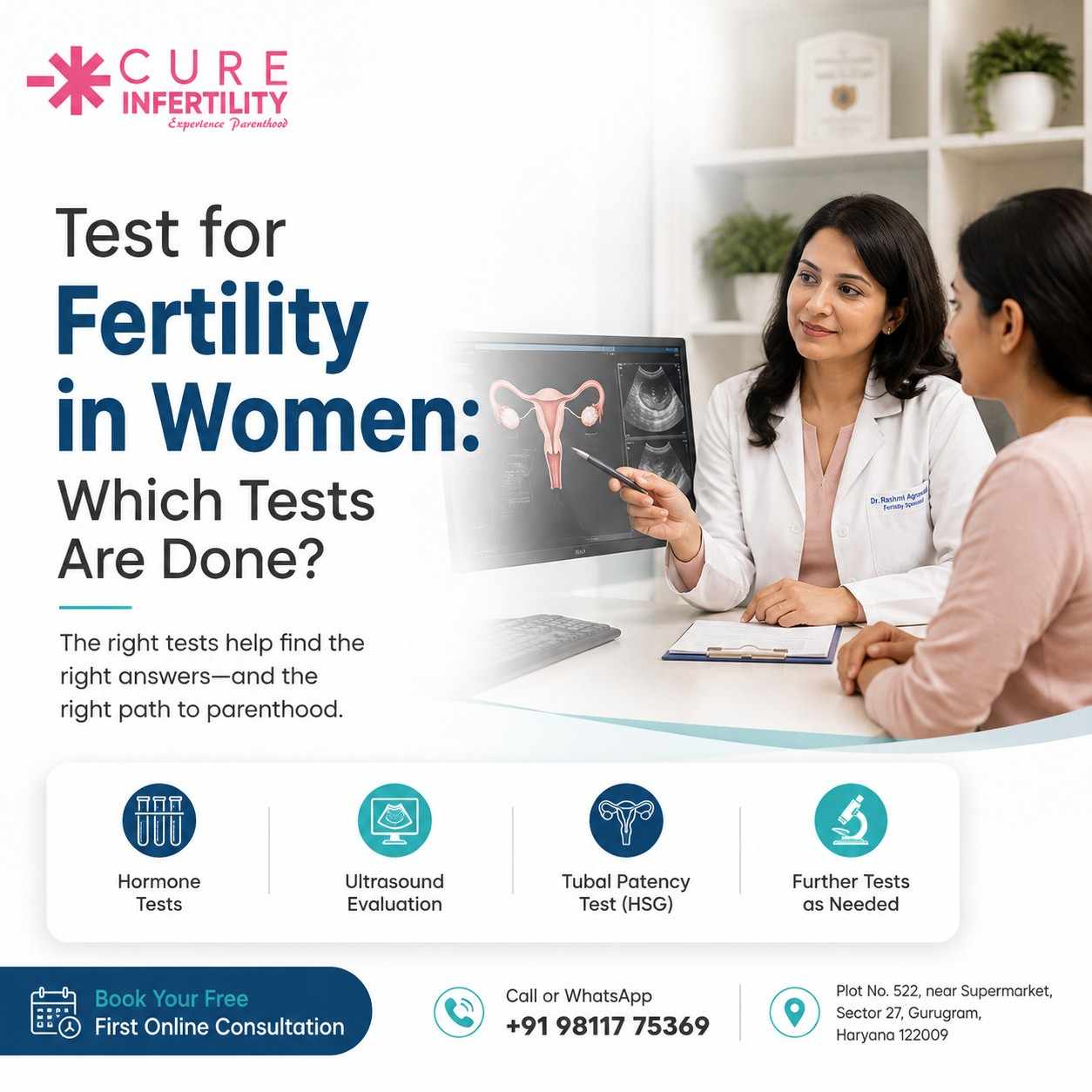
Struggling to conceive is stressful enough without wondering what's actually wrong. The good news is that female fertility can be evaluated fairly thoroughly with a set of well-established tests. Blood work, imaging, and in some cases a closer structural look together tell a doctor where the roadblock is. Here's what each test checks, when it's done, and what it means for your treatment path.
When Should You Get Tested for Fertility?
As a general rule, women under 35 are advised to see a fertility specialist after 12 months of trying to conceive without success. If you're 35 or older, that window shortens to 6 months, since egg quantity and quality decline more steeply with age. Testing is recommended sooner, regardless of age, if you have irregular or absent periods, a known condition like PCOS or endometriosis, a history of pelvic infection or surgery, or two or more pregnancy losses.
Hormonal Blood Tests for Female Fertility
Blood tests form the starting point of most fertility workups because hormones drive nearly every part of the reproductive cycle.
FSH, LH, and Estradiol are usually tested together on day 2 or 3 of the menstrual cycle. FSH (Follicle Stimulating Hormone) reflects how hard the brain is working to stimulate the ovaries; high levels can signal a declining egg supply. LH (Luteinizing Hormone) helps time ovulation and, alongside FSH, can point toward conditions like PCOS. Estradiol adds context to both readings.
AMH (Anti-Müllerian Hormone) can be tested on any day of the cycle and is one of the most reliable markers of ovarian reserve, essentially how many eggs remain. It's especially useful for planning ahead, whether that means timing treatment or considering egg freezing.
Prolactin and TSH (thyroid-stimulating hormone) are checked because both an overactive pituitary gland and an under- or overactive thyroid can quietly disrupt ovulation, even when periods still look regular.
Progesterone, tested roughly a week before your expected period (around day 21 in a 28-day cycle), confirms whether ovulation actually happened that cycle.
Ovarian Reserve Testing
Beyond the AMH blood test, doctors often pair it with an Antral Follicle Count (AFC), a quick transvaginal ultrasound done early in the cycle that counts the small follicles visible in each ovary. Together, AMH and AFC give a much clearer picture of egg quantity than either test alone, and this combination is often what shapes whether a natural cycle, ovulation induction, or a more assisted approach like IVF makes sense.
Imaging Tests: Ultrasound, HSG, and SIS
Transvaginal ultrasound is usually the first imaging test. It checks the uterus and ovaries for fibroids, cysts, or structural abnormalities, and tracks follicle development over the cycle.
Hysterosalpingography (HSG) is an X-ray procedure done with a contrast dye, typically between day 5 and 10 of the cycle. It checks whether the fallopian tubes are open (a blocked tube is a common, and often missed, cause of infertility) and maps the shape of the uterine cavity.
Saline Infusion Sonography (SIS), sometimes used as an alternative or complement to HSG, involves injecting saline into the uterus during an ultrasound to get a clearer view of the cavity, useful for spotting polyps, fibroids, or scar tissue that a standard ultrasound might miss.
When a Closer Look Is Needed: Hysteroscopy and Laparoscopy
If imaging suggests something structural (polyps, fibroids, uterine septum, adhesions, or suspected endometriosis), the next step is often direct visualization. Hysteroscopy and laparoscopy let the doctor examine the uterine cavity and pelvic organs directly, and in many cases treat what they find in the same procedure, rather than just diagnosing it.
Ovulation Assessment
Confirming regular ovulation is central to any fertility workup. This is done through a combination of cycle tracking (basal body temperature or ovulation predictor kits), the mid-luteal progesterone blood test mentioned earlier, and ultrasound follicle tracking. If ovulation turns out to be irregular or absent (common with PCOS), ovulation induction is often the first line of treatment before moving to anything more advanced.
Advanced Testing: Endometrial Receptivity (ERA)
For women who've had repeated failed embryo transfers despite good-quality embryos, the issue sometimes isn't the egg or the embryo. It's timing. An endometrial biopsy and ERA test checks whether the uterine lining is receptive at the exact time an embryo is being transferred, and helps personalize that window for future cycles.
Genetic and Infection Screening
Where there's a history of recurrent pregnancy loss, karyotyping (a chromosomal analysis) may be recommended for both partners. Screening for infections that can affect pregnancy outcomes is also a standard part of a complete workup.
What Happens After the Test Results Come In?
Female fertility testing rarely happens in isolation. A semen analysis for the male partner usually runs in parallel, since infertility involves a male factor in a significant share of cases. Once both sets of results are in, the findings point toward a treatment path:
- Mild ovulatory or unexplained infertility often starts with IUI (Intrauterine Insemination)
- Tubal blockage, more significant male factor issues, or a lower ovarian reserve usually points toward IVF
- Severe male infertility is typically addressed with ICSI, and in cases of azoospermia, surgical sperm retrieval
- A history of pregnancy loss or genetic concerns may call for PGT (Preimplantation Genetic Testing) alongside IVF
You can see the full range of options on our fertility specialties page.
Where to Get Fertility Testing Done in Gurgaon
If you're based in or around Gurgaon, fertility testing and consultations are available at our Sector 27 clinic under Dr. Rashmi Agrawal. Most of the initial hormonal and imaging tests can be completed within a single cycle, so you get a clear picture of what's going on without months of back-and-forth. You can book an appointment here to get started.
FAQs
What is the first test usually done to check fertility in women?
Most workups start with a hormonal blood panel (FSH, LH, AMH, TSH, prolactin) alongside a transvaginal ultrasound, since these give the quickest overall picture of ovarian reserve and reproductive health.
Are fertility tests painful?
Blood tests and ultrasounds are not painful. HSG and saline infusion sonography can cause brief cramping, similar to period cramps, but the discomfort is usually short-lived. Hysteroscopy and laparoscopy are done under anesthesia.
Can fertility tests be done during periods?
Some tests, like FSH, LH, and estradiol, are specifically done early in the cycle (day 2 or 3), so a period isn't a barrier. It's actually when certain tests need to happen. AMH can be tested any day.
At what age should women start fertility testing?
There's no fixed "start age," testing is guided by how long you've been trying to conceive. Under 35, that's typically 12 months; 35 and older, 6 months. Women with irregular cycles or a known reproductive condition should get evaluated sooner, regardless of age.
Do normal fertility test results mean pregnancy is guaranteed?
No. Normal results rule out several common causes but don't guarantee conception, since fertility involves multiple factors, including some that current tests can't fully measure (like egg quality at a cellular level). They do, however, help your doctor recommend the most appropriate next step.
Is the male partner tested too?
Yes. A semen analysis is a standard part of a complete fertility workup and is usually done alongside the female partner's testing, since male factors contribute to a substantial proportion of infertility cases.
Have Questions About This Topic?
Get a personalised consultation with Dr. Rashmi Agrawal at Cure Infertility, Sector 27, Gurugram.
Book Consultation